Home › Ski & snow › Ski tips
Skiing High Peaks in the Alps: A Courchevel Guide
Standing atop snowy peaks in the Alps gives you an unmatched sense of perspective. While mountaineers spend summer days climbing four-thousand-meter giants, winter brings a different way to experience high-altitude alpine terrain. In Courchevel and the wider Three Valleys network, modern lift systems whisk you straight onto towering ridges where wide bowls and long descents unfold under cold, crisp skies.
You do not need ropes or crampons to enjoy high-mountain thrills here. With thoughtful route planning, good local instruction, and an eye on daily conditions, you can enjoy some of the most dramatic summit skiing in France while returning every evening to comfortable village comforts.
High Altitude and Reliable Snow in Courchevel
Skiing at high elevation changes everything about your day on the mountain. In the Courchevel valley, slopes face mostly north and east, which shelters the snowpack from strong afternoon sunshine and preserves light, chalky conditions deep into spring. When lower valleys face warm weather or variable snow, the highest ridgelines across this corner of Savoie continue to offer crisp turns and reliable cover.
Altitude also brings sudden shifts in mountain weather. Cold fronts move across the massifs quickly, bringing thick cloud cover, freezing winds, or heavy snowfall within a few hours. Morning runs on open ridges can turn into whiteouts by midday, so experienced skiers always track the local forecasts before venturing onto exposed summit terrain.
Iconic Ridges and Peaks across Les 3 Vallées
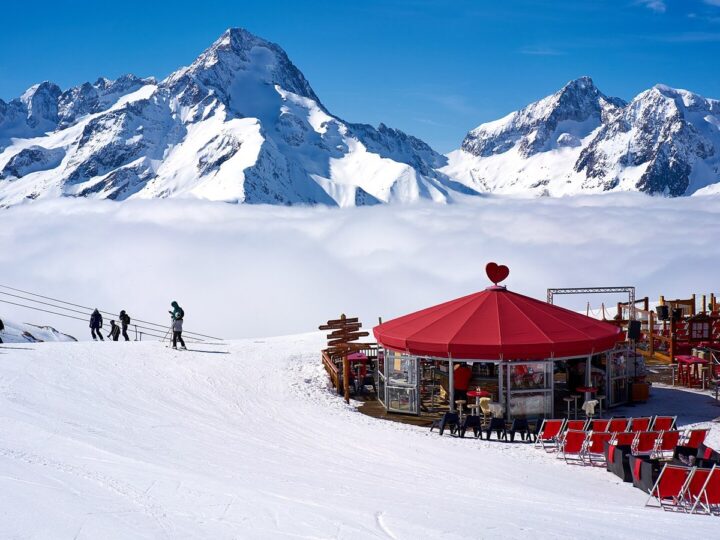
While four-thousand-meter summits require dedicated mountaineering expeditions, Courchevel gives you direct access to classic peaks reaching close to three thousand meters and beyond. You stand opposite Mont Blanc, looking out across granite massifs while clicking into your bindings at the top station.
- La Saulire: Standing at the head of the Courchevel bowl, this iconic crest links Courchevel to Méribel and offers sweeping views across the Tarentaise valley alongside legendary steep runs.
- Col de la Loze: A scenic ridge between Courchevel and Méribel that offers panoramic views, gentler cruising options, and a quieter high-mountain feeling.
- Signal: Perched above Moriond, this summit provides open, sunny skiing with views over the wild Vanoise National Park boundary.
- Cime Caron and Pointe du Bouchet: Accessible on a Three Valleys day trip toward Val Thorens and Orelle, these summits push past three thousand meters into true high-alpine glacial landscapes.
Crossing between valleys allows you to follow the sun from breakfast until late afternoon. You can begin early on the high morning runs of Courchevel Moriond, cross La Saulire into Méribel by noon, and finish with panoramic descents on the upper glaciers before heading home.
Choosing the Right Village Base
Courchevel is not a single town but a collection of distinct settlements arranged at different elevations. Picking the right village base sets the tone for your entire winter trip, determining how quickly you reach the summit lifts each morning.
| Village | Altitude Character | Best For | Lift Access |
|---|---|---|---|
| Courchevel 1850 | High alpine snowfront | Direct high-altitude access and luxury amenities | Instant access to Saulire cable car and Verdons |
| Courchevel Moriond (1650) | Sunny shelf with wide pastures | Families and cruising intermediate skiers | Ariondaz and Signal lifts |
| Courchevel Village (1550) | Quiet, practical alpine hub | Quick access to 1850 slopes on a budget | Tovets chairlift and Grangettes gondola |
| Courchevel Le Praz (1300) | Traditional stone-chalet hamlet | Atmospheric dining and wooded descents | Direct gondola to 1850 and Saulire link |
| La Tania | Car-free woodland resort | Families and relaxed group stays | La Tania gondola connecting toward Méribel |
Summit Runs for Every Skiing Ability
High mountain terrain has an unfair reputation for being exclusively steep and perilous. In Courchevel, lift engineers and piste groomers have created accessible lines down from major ridgelines, meaning skiers of varying abilities can share the view from the top.
For confident beginners and leisure cruisers, wide green and blue tracks sweep down from ridge crossings toward gentle mid-mountain plateaus. The Creux bowl provides a long, rolling blue descent that lets emerging skiers experience big-mountain scale without confronting sheer drop-offs. Above Moriond, rolling blue routes allow effortless turns under open skies.
Advanced skiers seeking steep gradients will find serious tests off La Saulire. The famous Grand Couloir stands out as a rite of passage, presenting a narrow ridge approach followed by an expansive, mogul-filled pitch. The Suisses run drops sharply toward the mid-mountain forest, while the Combe de la Saulire gives expert carvers a vast red canvas when freshly groomed at first light.
Ski Schools and Mountain Guides
Navigating high terrain requires sharp technique and route knowledge. Taking lessons with a professional instructor speeds up your technical progress, helping you maintain balance on wind-packed crust, steep moguls, or flat light conditions.
Courchevel hosts several top-tier ski schools, including the long-running ESF branches across all villages, alongside private academies and international coaching teams. If you dream of venturing beyond the groomed piste poles into uncontrolled bowls, booking a certified UIAGM mountain guide is the safest decision you can make. Guides provide essential avalanche safety equipment, read the snow layers, and navigate crevasses or rocky outcrops with professional calm.
Local tip: Book private summit clinics or off-piste guides several weeks before arriving, especially during February holiday weeks when demand peaks across the Alps.
Equipment Rental and Lift Pass Selection
Summit conditions demand equipment that responds precisely to variable surfaces. Modern all-mountain skis with sturdy edges and rockered tips handle everything from morning corduroy to afternoon wind drifts. Specialized rental shops throughout Courchevel provide custom boot fitting and fresh tuning, which makes an enormous difference to your edge hold on icy upper ridges.
You also need to select the right lift pass. The local Courchevel valley pass covers an enormous variety of terrain, offering more than enough acreage for beginners, intermediates, and families staying for a week. However, if your goal is touring broad summits and descending into neighboring valleys, the full Three Valleys pass gives you unrestricted freedom to roam across Courchevel, Méribel, Les Menuires, and Val Thorens.
Mountain Safety and Altitude Awareness
Enjoying high altitude requires common sense and respect for alpine risks. Thinner air tires your legs faster than expected on day one, so pacing yourself and drinking plenty of water prevents altitude headaches and fatigue. Wear a certified helmet at all times to protect against unexpected spills on hard snow.
Never duck under rope boundaries into closed terrain. If you venture off-piste, always carry an avalanche transceiver, probe, and metal shovel, and confirm that every member of your party knows how to use them. Check the daily avalanche bulletin before clicking into your skis, and secure comprehensive mountain rescue insurance to cover any medical emergency on the slopes.
Frequently asked questions
Can intermediate skiers reach the highest summits in Courchevel?
Yes, intermediate skiers can reach top ridgelines such as La Saulire and Col de la Loze. Wide blue tracks and manageable red runs lead down from these high points, allowing skiers to enjoy big-mountain scenery without skiing steep couloirs.
Should I purchase a Courchevel pass or a Three Valleys pass?
Beginners and families often find that the Courchevel valley pass provides more than enough variety for a week. Skiers who love long summit-to-summit tours and traveling to Méribel or Val Thorens should choose the full Three Valleys pass.
What safety precautions are necessary for skiing off-piste here?
Always hire a certified mountain guide, check the daily avalanche risk bulletin, and wear a functioning transceiver, shovel, and probe. Stay strictly within marked runs if you lack proper safety gear and backcountry training.
How does high altitude affect early-season and late-season snow?
Thanks to high-elevation ridgelines and north-facing aspects, Courchevel maintains cold, chalky snow conditions long before lower resorts open and well into spring. Upper bowls often retain dry snow while lower tree runs turn soft in the afternoon sun.